Mason Recreation

Mason Recreation Fitness Classes—Give Them A Try

By Alison M. Hall, MS, CPT

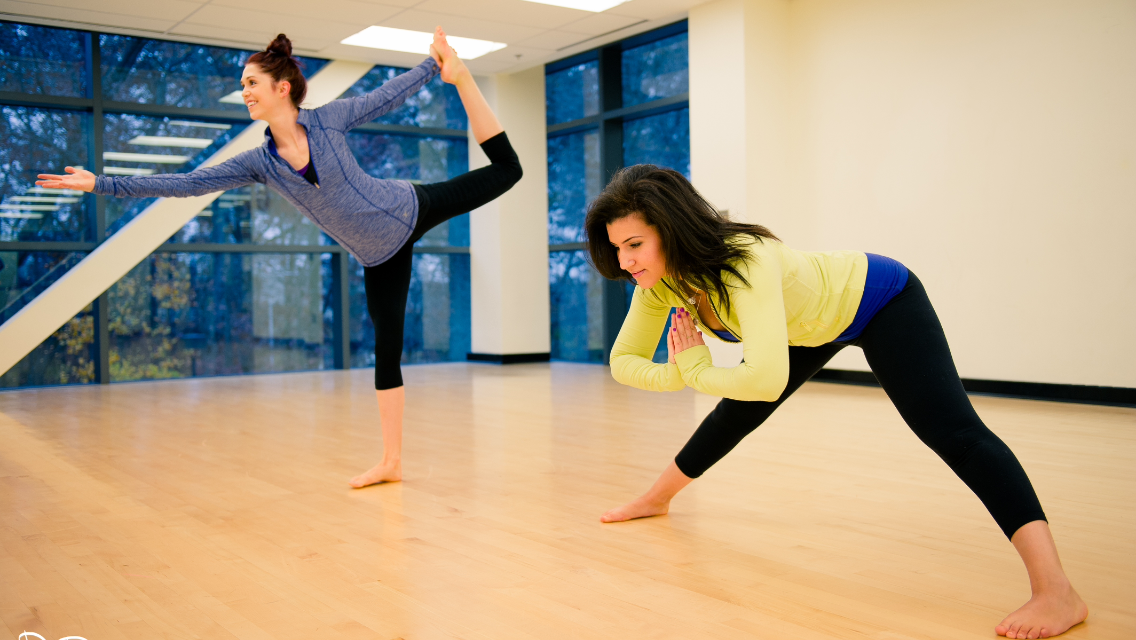
Have you ever walked past a Zumba class and thought, “that looks like fun, but can I do that?” Or have you ever heard the music pumping from the group cycle room and thought, “I’d love to ride to that music, but can I really go in that big, dark room?” Group fitness classes can be scary at first, especially if you don’t know anyone in the class or if you haven’t taken one before. However, Mason Recreation group fitness welcomes everyone. It doesn’t matter if you don’t know how to set up a bike, if you believe you have two left feet, or if you’ve never exercised in a group setting before. All of our instructors are certified fitness professionals, and they are trained in how to help a beginner. If you already love Zumba and rock every cycle class, you will get an amazing workout in our other group fitness classes too. Each class truly offers different experiences and levels.GEX Benefits
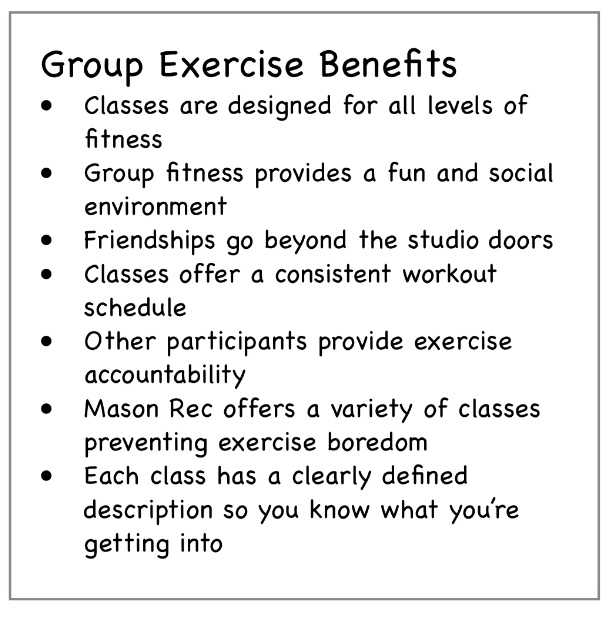
Group fitness classes offer many benefits beyond simply exercising on your own. The classes create a fun social environment, a consistent schedule, and a safe and well-designed workout with no prior knowledge or experience necessary. Additionally, there is an accountability factor. The instructor will welcome you back each time you come. Seasoned participants will congratulate you for joining in. New friends will text you to make sure you’re going to show up, whether it is 6:15 am boot camp, noon cycling, or 6:30 pm yoga. Group fitness creates a new camaraderie and accountability among participants and the instructor.

Another benefit of group fitness is variety. One common reason for quitting an exercise program is boredom. Our instructors offer a variety of formats and styles to challenge you all semester long. Each cycle instructor has his or her own style of music. Each Zumba class has a different flavor. Each yoga instructor offers his/her own personal touch. Every martial arts and self-defense format has its own focus.

To some, the variety of exercise options can be overwhelming. Our group fitness schedule does offer a lot of options, but another benefit of group fitness is that each class has a description. Read the description and start with one or two classes that interest you. Get comfortable with those classes, then try something new, or if you like a particular format, try a new instructor. Keep up that pattern, and you will take control of your own fitness destiny.

Finally, the most common reason given for quitting an exercise program is lack of time. All of our classes are an hour or less, including 30-minute classes offered Monday–Thursday at 5:00 pm. Our full schedule is available at recreation.gmu.edu. Green Access classes (Group Exercise and Cycle) are always free for full-time Mason students and for a minimal facility membership fee for part-time students. Unlimited Gold Access classes (Yoga, Pilates, Martial Arts and Self-Defense) are $50 for students and $70 for other Mason Recreation members for the entire semester. If you have questions you can contact us at [email protected]. We can’t wait to see you in class!
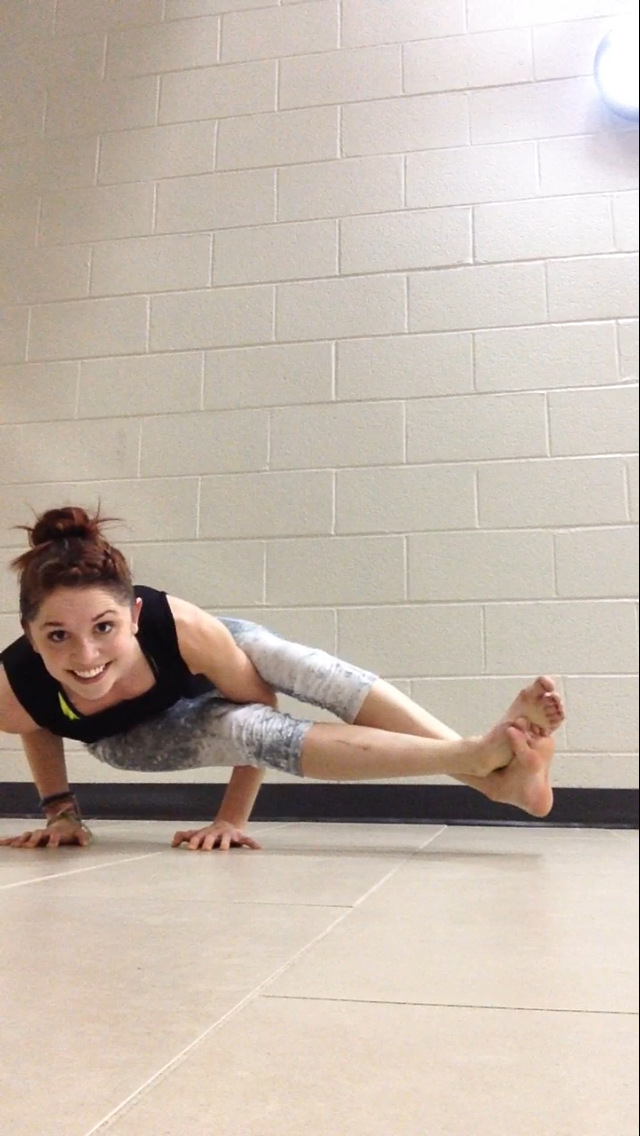
Diary of a Happy Yogi: Honor Your Practice

By: Ashley Whimpey

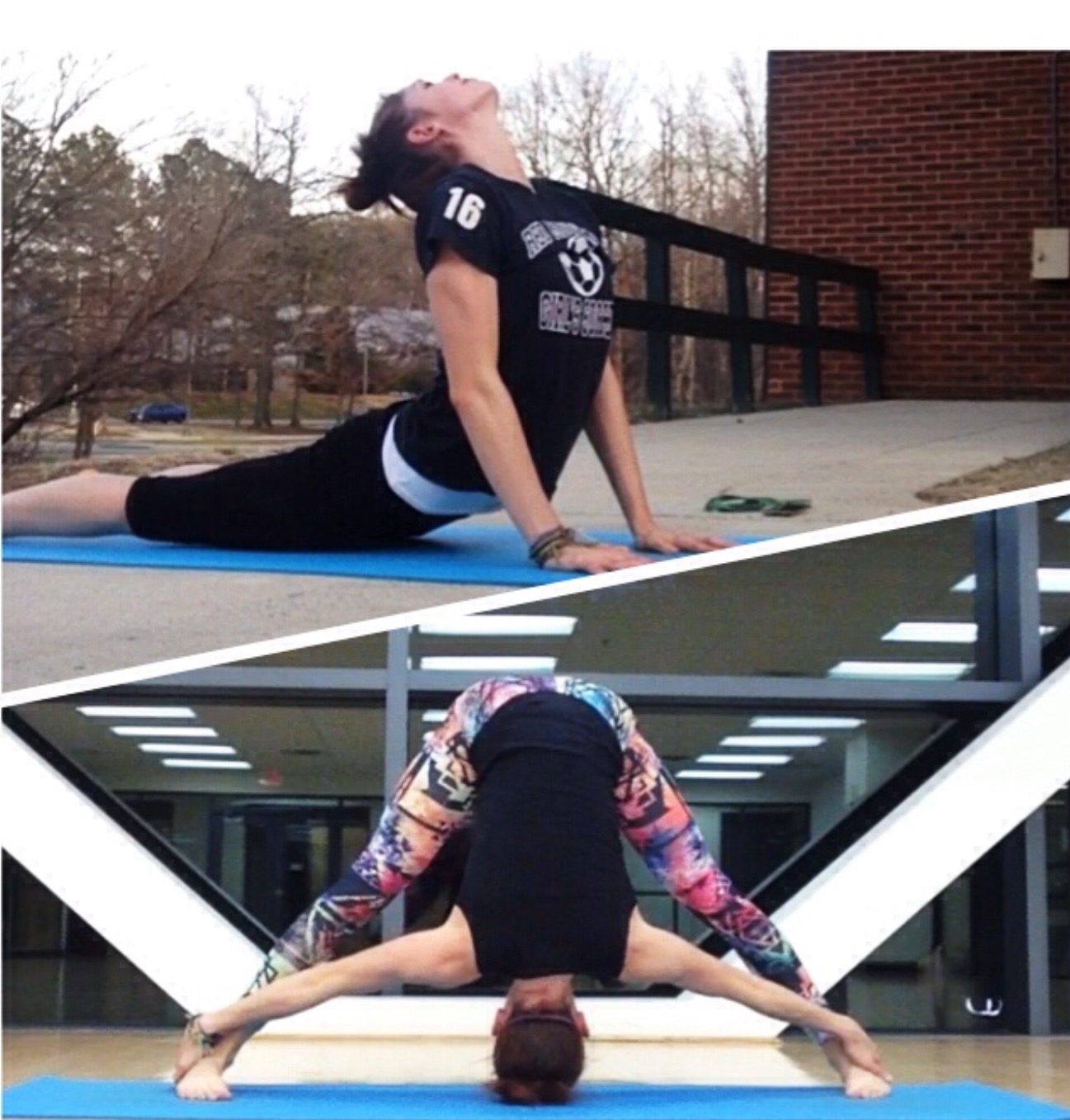
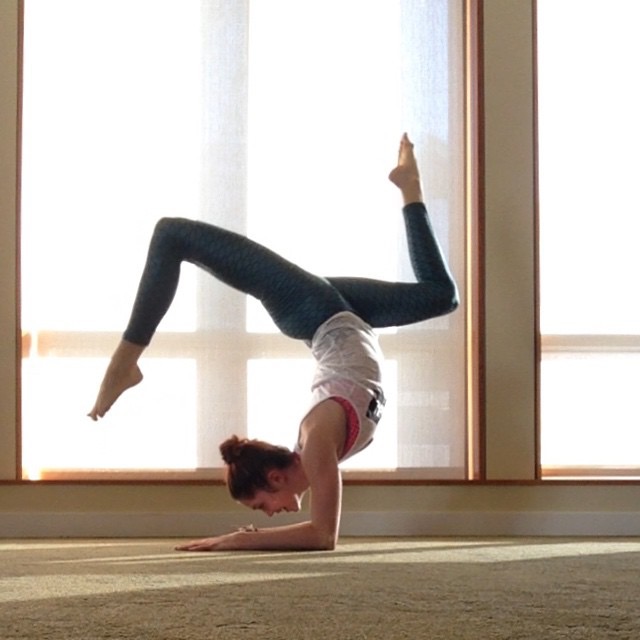
Yoga could be seen by some as art due to its endless number of shapes created during practice. While beautiful, the best shapes are the ones that honor your practice.

Today, meet Carson and Lily. Carson has been practicing yoga regularly (about three times a week) for the last year or so, and has begun to complete full expressions of many of the poses. Lily is here for her second yoga class ever. She used to be a dancer and feels confident can twist her body into anything to match the instructor.

About half way through the class, Carson feels fatigued, especially in his legs since he ran this morning. Carson breaks himself from the flow to pause in a child’s pose for a minute and then resumes his practice. Lily is also feeling very unstable. Her years of flexibility are allowing her to extend extremely well, but now that the balance portion is coming up, she’s starting to get wobbly and almost takes out a fellow yogini.

Closing the class with the final series, the instructor offers progressions and lower variations of a shoulder stand. Carson feels confident about tucking his chin into a familiar place, pressing his heels into the ceiling, and even advancing to lower his hands from his low back as he removes the bend in his hips. Lily does her very best and is able to manage the same shape, but does not feel able to breath freely and experiences a lot of pain on her upper vertebra.

The class concludes.

Carson and Lily are probably at a similar fitness level, and because Lily is female, she probably has more inherent flexibility than Carson. So why did Lily wake up the next morning unable to move freely and Carson felt rejuvenated? The answer is simple: Carson was honoring his practice.

Honoring your practice is tuning in to the soft hum of life inside that dictates how and when you will do something. It’s what causes the difference between Monday morning’s class being incredible—leaving you feeling like you could run a marathon, lift a car over your head, and take on Michael Jordan on the court—and Friday morning’s class leaving you feeling like you’re made of stone. Both classes could be exactly the same, but it’s not always the class or the lineup of workouts that changes, but rather the hum inside you.

Honor is very similar to honesty. You might start off saying, “I’m compromising my triangle so I can reach for the floor because Susie is. I feel like I’m better than she is, so if she can, I can.” Then you realize it doesn’t matter what Susie is doing. Susie is not you. Susie does not have the same practice, thoughts, or internal hum. Honoring your practice also lets you go the other direction by realizing “My instructor said we could take it down, but I’m actually feeling pretty great, and I want to expand on that feeling.”

To honor your practice is to allow your focus to be so sharp and tuned in that the other yogis fall away from your vision. With practice you’ll begin to move only on their energy, feeling it and adding to it with your own, instead of whipping your head around trying to match them or surpass them.

Three things are crucial to honoring your practice:

  1. Ask when you don’t know. If you’ve never done a shoulder stand before or if your triangle isn’t matching up with the instructor’s but you can’t tell why, ask. The reason to practice with an instructor is to be able to have someone to ask, otherwise you might as well stick to hurting yourself in your living room and feelinging lost.
  2. Realize not all days are created equal. Maybe last week you had your elbows wrapped all the way under your toes in that forward fold, but this week you feel more like it’s a better idea to keep your hands on your shins, or vice versa.
  3. It’s a yoga practice. At practice we learn, we learn, and we learn.

Diary of A Happy Yogi: Different Times Of Day for Yoga

IMG_2296By: Ashley Whimpey

Pajamas on, face freshly washed, blankets fluffed and waiting for a tired body to sink into them… This is ready-for-bed. Although, sometimes even when I climb into the welcoming cushion of my mattress, I cannot find any comfort. My mind zips left and right categorizing tasks I need to do and double checking if there are only 100 or 1,000 things I forgot to do that day. Even when there aren’t tasks in my head, I often find myself unable to fall asleep due to the incredibly distracting evaluations of life going on inside my brain. For example, how do baby turtles know how to get to the ocean?

Unfortunately for you, I didn’t look up the answer to the turtle question. Instead I dug up how to slow the racing thoughts. I found a study of Obsessive Compulsive Disorder patients and yoga practices. Yoga was proven to significantly increase their ability to fall asleep quickly and stay asleep. The focus and mind exploration learned and practiced in a yoga class are the reasons so many of the patients found success. They reported being more able to freely experience their bad emotions and then let them pass. Instead of fighting the racing thoughts, they allowed them to just pass by and lead them deeper into dreamland.

However, a national survey of yoga participants (4,307 randomly selected across the country) all frequently mentioned the benefits of yoga including “energizing their day,” when practiced in the morning. Yoga taps into the human body’s energy current, which is referred to as prana by many yoga practitioners. Our prana is a life force, which comes from food, oxygen, proximity to other living things, etc. When there is a blockage in the flow of prana through the body, prana is inefficient. Yoga works to restore flow, and if the practitioner’s day is just beginning, can promote energy.

The effects of a yoga class depend greatly upon the content of the class. Too intense or vigorous of a class late in the evening can turn the energy dial too high and make it just as hard to sleep as before. Remove just enough blockades to silence a racing mind, however, and you’ll be out like a light.

References:

Haddad, B. (2013). Energy Release And The Art Of Self-Protection. Massage & Bodywork, 28(6), 90-97.

Ross National survey of yoga practitioners: Mental and physical health benefits. Complementary therapies in medicine. (08/2013)

Hertenstein, E., Rose, N., Voderholzer, U., Heidenreich, T., Nissen, C., Thiel, N., … Külz, A. (n.d.). Mindfulness-based cognitive therapy in obsessive-compulsive disorder – A qualitative study on patients’ experiences. BMC Psychiatry, 185-185.

Diary Of A Happy Yogi: Extrinsic vs. Intrinsic

By: Ashley Whimpey

To the majority, exercise is an extrinsic goal satisfier. While you may not enjoy the feeling of the bar producing callouses on your hands or the actual movement of pushing yourself from the ground over and over in a pushup, you have a goal in mind that makes it necessary. Sit ups may be your least favorite exercise, but you’ll do it because you want a stronger core more than you want to stop.

Yoga often begins the same way. New addicts are obsessed with being able to touch their toes to their heads or pull their legs up behind their necks. Slowly though, the “present mindset” begins to set in, and there is a shift to intrinsic motivation. The hour seems shorter and goes by much quicker. The sustained humming on your happy strings makes the time flow along, and your “Goal Reached” feeling set off like mad. The feeling lasts longer than the two seconds you spend in front of some streaky mirror somewhere noting how you finally have notable biceps when you twist your wrist up and hold your breath.

In a science context, this shift is attributed to a few things inherently great about yoga. Though many asanas (poses) and variations make up a yoga class, many of the same asanas are used again and again across all different yoga genres. This repeated practice of the same, or at least similar, poses and movements allows the practitioner to enhance his or her competence when it comes to exercising, agreeing with statements like, “I think I am pretty good at exercising” (Schneider & Kwain, 2013).

Other domains described by Schneider & Kwan include autonomy, or feeling like you have control over the way the exercise happens or like the activities are pleasant. Almost every asana has more than one variation, making it extremely autonomous in that respect. However, there is also a saying to, “Honor your practice,” and pause (or stop altogether) in a yoga class in order to give the body what it is asking for. To practice without attachment, meaning there is a silence to the voice usually saying we are not enough, is a tradition in yoga classes that puts regular practitioners in the line of fire to become more intrinsically motivated.

Further, exercising in order to be with others (relatedness), and exercising because of an understanding of the value of it (regulation), promote the intrinsic motivation that takes you to a state of thorough and complete satisfaction.

The movement of yoga, the breathing and being, all create a continuous meeting of a goal. Instead of a split second recognition of reaching a goal weight, which quickly diminishes into another goal to be set and worked toward, it’s being that you’re after. It’s being on the mat, or in the state of mind, or in the present moment as you bend and breathe and be.

Reference:

Schneider, M., & Kwan, B. (2013). Psychological need satisfaction, intrinsic motivation and affective response to exercise in adolescents. Psychology of Sport and Exercise, 776-785.


IMG_1928

Diary of a Happy Yogi: Yoga Lingo

By Ashley Whimpey

Despite any significant amount of hours spent in a yoga class, even the most practiced individuals can be halted right in the middle of their Sun Salutation at some unfamiliar jargon getting thrown around. Hopefully this revelation allows for a little less time spent deciphering the language and more time spent deciphering how your teacher gets their toes all the way up there.

Yogi: a male yoga practitioner.

Yogini: a female yoga practitioner. Obviously this means the title of this running log should be changed, since I am a female and thus would be a yogini, not a yogi. Nonetheless, yogi works all the same and is typically interchangeable.

Yoga Sutra: a guide book of 195 statements (which are rather philosophical). The statements outline 8 “limbs” of yoga, the third of which is known as Asana.

Asana: physical shapes and poses of yoga.

Om: a sound/vibration meant to be like the “sound of the universe” because it represents the way the universe is always moving. The leaves rustling, the sun rising or setting—om is a sound of movement continuous in the world around us.

Namaste: “The light in me honors the light in you.” Namaste is an acknowledgement of “thank you” from one soul to another.

Savasana: the best pose in the history of yoga. It’s also known as Corpse Pose, or the final resting. Not meant to be morbid, Savasana is the closing posture of a yoga class where yogis and yoginis alike allow their bodies to be supported by the Earth as they reflect on their class, hearts, souls, and lives for a few brief moments while laying supine (face up) on their mat.

Gaim, Lulu, Teeva, WerkShop, YogiToes, HardTail: all of these are yoga brands. Even YogiToes, which are actually just socks with little grippies to prevent sliding all over a sweaty mat. From mats, to bags, to ridiculously expensive leggings, these are just a few of the most commonly referenced yoga brands dominating the markets right now.

The final word I’d like to define here (especially for any unfamiliar yoga goers) is the word flexibility. Claiming not having enough flexibility to join in a yoga class is ludacris. It’s the same as explaining you cannot take tennis lessons because you don’t already play tennis. All humans have flexibility. Albeit, some possess a seemingly inhuman amount of it, but it’s in everyone all the same. The stretching of any inch of muscle or the soul, is flexibility.Hopefully the demystification of these words prove useful as you venture on to another level of yoga-dom. Namaste.

Read more at:

https://www.verywell.com/corpse-pose-savasana-3567112

http://www.everythingyoga.com/brands.htm

http://www.yogajournal.com/article/beginners/yoga-questions-answered/

IMG_2248


Diary Of A Happy Yogi: Progressions and Regressions

By: Ashley Whimpey

Modify is to change. Modification can take, “Now scratch your nose with your toes,” and change it into something more “all-levels” friendly. It could also take a mastered pose into a new and exciting place. As a personal journey, it’s important to personalize classes. Yoga is for the individual, and comes to that individual in the way they need it. Formal yoga classes (surprisingly) can move a little too quickly for an instructor to offer up variations of the poses for all participants. Luckily, I’ve collected some for you to either take the asana up a notch or down to a different level!

Mountain Pose: The standing and beginning pose of many yoga classes.

Take it down: The purpose of Mountain Pose is to feel grounded. If putting your feet wider creates a more comfortable (and stable) position, that’s okay. There isn’t a law.

Level up: keeping the core engaged, bring palms together above your head, shoulders down, and rotate at the hips drawing a large circle. Do both sides, and feel the warmth in your center.

Warrior three: the table top balance pose.

Take it down: Place both hands on a block and focus on the balance with the legs instead of both arms and legs. Try removing one hand, then the other. Try placing the arms behind you like a cape, or in Eagle Pose Arms, instead of above your head in the traditional Superman-esk position.

Forward fold: Half bent from the hips to stretch the hamstrings.

Take it down: Place the hands on the thighs or shins into a flat-back extension pose. Try placing the hands on a block to bring the ground closer.

Level up: Keeping the heels together, move the toes apart into a V shape. Try placing the hands on the calves to deepen the fold.

Sun God: Essentially a wide legged squat, the feet are also turned out and the chest is lifted.

Take it down: Try keeping the elbows on the thighs and pressing up the chest. Rising slightly from the deeper squat is also appropriate. The pose should only be performed if the chest can remain more perpendicular than parallel to the floor.

Level up: Raise onto the balls of the feet.

Pigeon pose: This half-split is a great preparation for full split, as well as a great stretch to the hip flexor, hamstring, and lower back.

Take it down: Bend the back leg and bring it in toward the front foot, creating a diamond shape.

Level up: Try to move the front foot forward until the shin is parallel to the wall in front of you while keeping the knee and upper thigh on the ground.

Side plank: from a hands-under-shoulders full plank, balance on one side with the chest turned to the wall.

Take it down: Drop the inner leg and use the knee to assist you. Stagger the feet.

Level up: Raise the top foot off the ground. Try and reach for the foot with your top hand, further extending the leg up or bending it behind you into Raindrop Drinking Bird.

Triangle:  Hamstring side stretch. To get specific and offer the best solutions, imagine a right-sided triangle pose, meaning you are leaning toward the right leg. The left foot should be pointed forward to the front of the room, and the right foot should be pointing to the right.

Take it down: Triangle only works its magic if it is performed with an “uncompromised line” in the torso. Compromised lines turn into C’s. When the upper body is tipping toward the leg, drop the lower ribs and at the moment the line begins to curve, drop the arm. The arm should balance on the leg and offer support.

Level up: Keeping a straight torso, in line with the leg, open the chest and sink the leading hand all the way to the ankle, or the floor.

progressions

Fitness At Home

By: Alison Hall

The Aquatic and Fitness Center, RAC, and Skyline Fitness Centers offer a variety of fitness activities. You can take group fitness classes, lift weights, train your balance, stretch, play basketball—the possibilities are endless. But what do you do when you’re home for spring break? Maybe you are traveling for work, or snowed in? There are many options for home workouts, and they can be just as effective as your workout at the gym.

You don’t need a room full of expensive equipment to work out at home. You can train both cardio and strength without any equipment. You just need enough space to safely move around. It’s not a good idea to think “I won’t trip on that magazine rack.” Move it out of the way, and make use of the space you have. One option is to alternate circuits of body-weight strength exercises with circuits of cardio drills. Start off by doing 30 seconds of work with 30 seconds of rest for each exercise. Always warm up with light cardio 5-7 minutes before you increase your intensity, and stretch the muscles you worked after.

If you do want to add equipment to your home workout, resistance tubing is one of the least expensive and most portable options. Tubing comes in a variety of resistances, and you can always adjust an exercise by changing how you hold the tube. The negative side to tubing is that it can be hard to be consistent with your resistance based on where you hold the tubing. It takes a good mind-body connection to feel that you have the proper resistance. Always inspect your tubing before each workout. If your tubing is torn. Replace it so it does not snap while you are using it.

Many home exercisers invest in a set of dumbbells. They are more expensive than resistance tubing, but you always know what resistance level you are using. Purchase 2-3 different weights of dumbbells, and realize that when they are too light, you will want to buy heavier sets. If you are using heavy dumbbells, be sure to have a spotter. Other good home gym purchases are a yoga mat, stability ball, BOSU, Gliding Discs, and pull-up bar. Most equipment can be purchased at sporting goods stores, discount stores, or online.

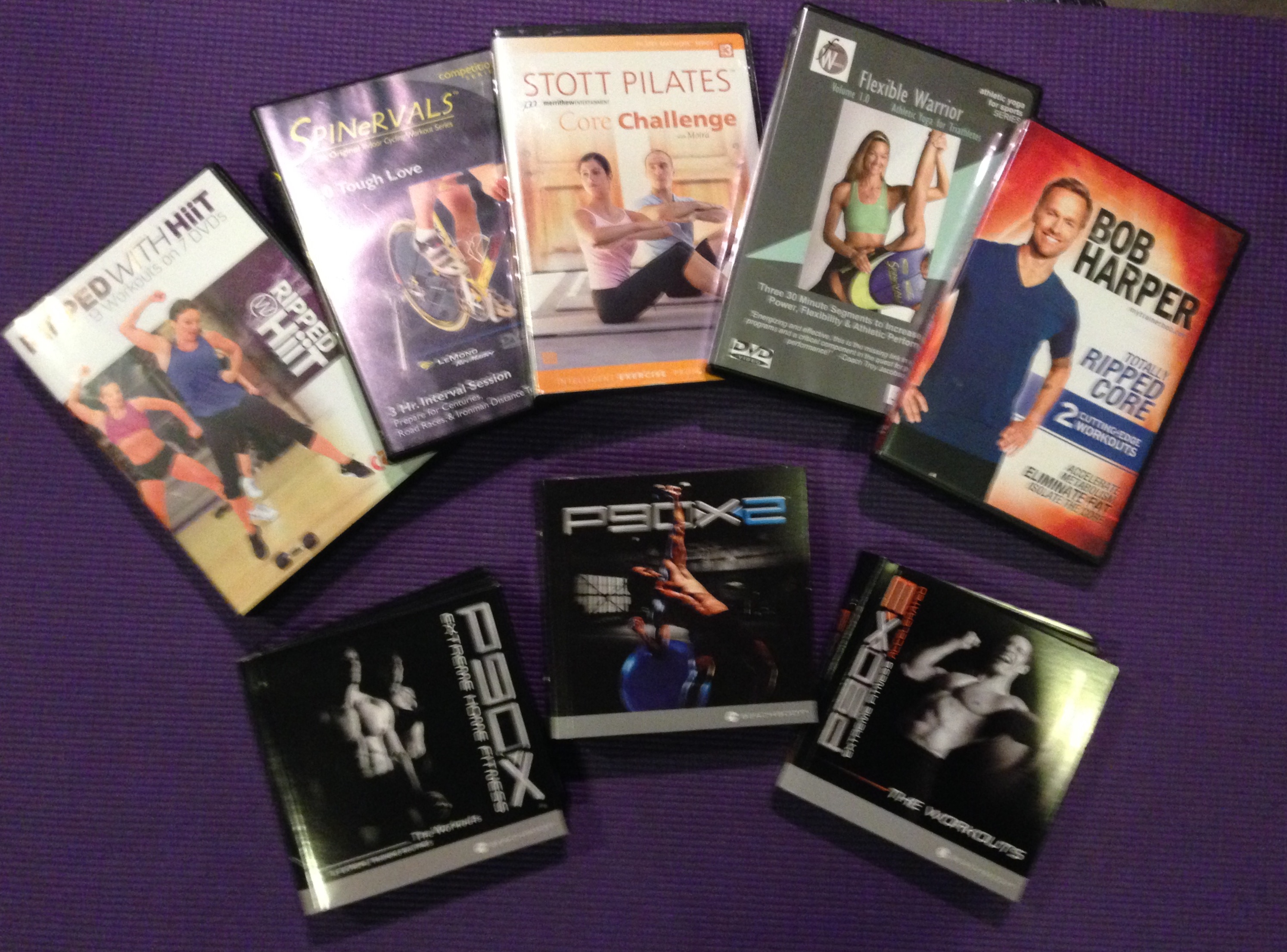
ACE fitness (www.acefitness.org) gives a complete library of exercises and stretches for each of the above categories with video demonstrations. The library can help you design a complete workout with or without equipment. StudentHealth101.com also presents workout ideas. However, what if you like having the group fitness instructor or personal trainer telling you what to do? Exercise DVDs are a great option. There are exercise videos for every style of working out. Instructors such as Cathe Freidrich, who is a pioneer in advanced level-home workouts, Tony Horton of P90X fame, and Bob Harper from The Biggest Loser offer advanced strength training advdsnd cardio DVDs. If you like indoor cycling and have a bike or trainer at home, Spinervals coach Troy Jacobson has workouts for general fitness or elite cycling. Zumba has a line of workouts with the same party feel of a live class. There also are many yoga and Pilates DVDs on the market for every level. Many instructors are transitioning into downloadable workouts as well. Videofitness.com is a great resource for exercise DVD reviews. The reviews are written by consumers, not the instructors or producers of the workouts. Collagevideo.com and totalfitnessdvds.com have clips of all the DVDs they sell, so you can get a taste of the workout before buying it. Some instructors post videos of full workouts for free online, so if you find one you like, you can search for that.

Now “I can’t get to the gym” is not an excuse. Use the space and equipment you have, and have a great next workout.