Mason Recreation

Diary of a Happy Yogi: Yoga for Everyone by Ashley Whimpey

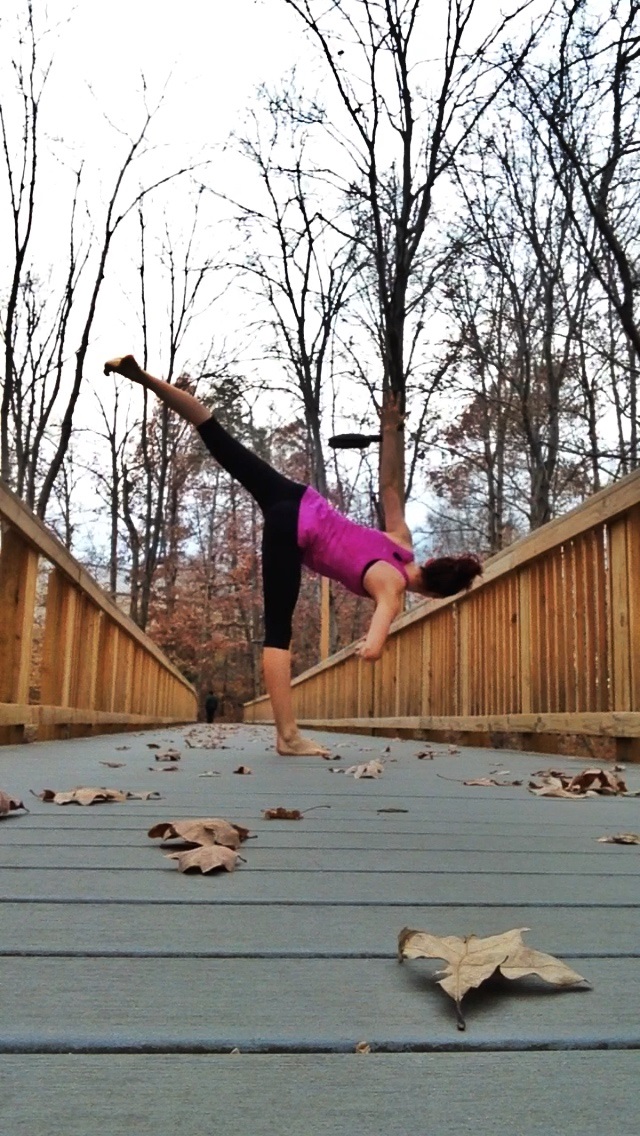
Due to Instagram and Tumblr posts, many believe yoga is all about putting your legs around your face, standing on your hands, or balancing on your head. It seems only the incredibly flexible, or those desiring to be, should practice yoga. These ideas are common misconceptions.

Yoga poses force concentration.  The serenity from this concentration discovered in yoga follows you off the mat. It can allow you to discover a deeper sense of power within yourself. For example, when you are strength training. The calm state of mind allows you to function without worrying about injuring yourself because you have learned how to be aware of your body by listening to your body in yoga classes.

The flexibility benefits of yoga translate perfectly into strength training as well. Yoga classes involve activating your slow-twitch muscle fibers when you’re asked to hold poses. Throughout the progression of class your muscles get warmer. Then you may utilize muscles you may not have known you had. The warmth of the muscles allows you to sink deeper into poses, and increase blood flow.As you stretch, and flow through the movements your body tones and balances. The muscles lengthen but are being activated enough to exert more energy than when they were at rest.

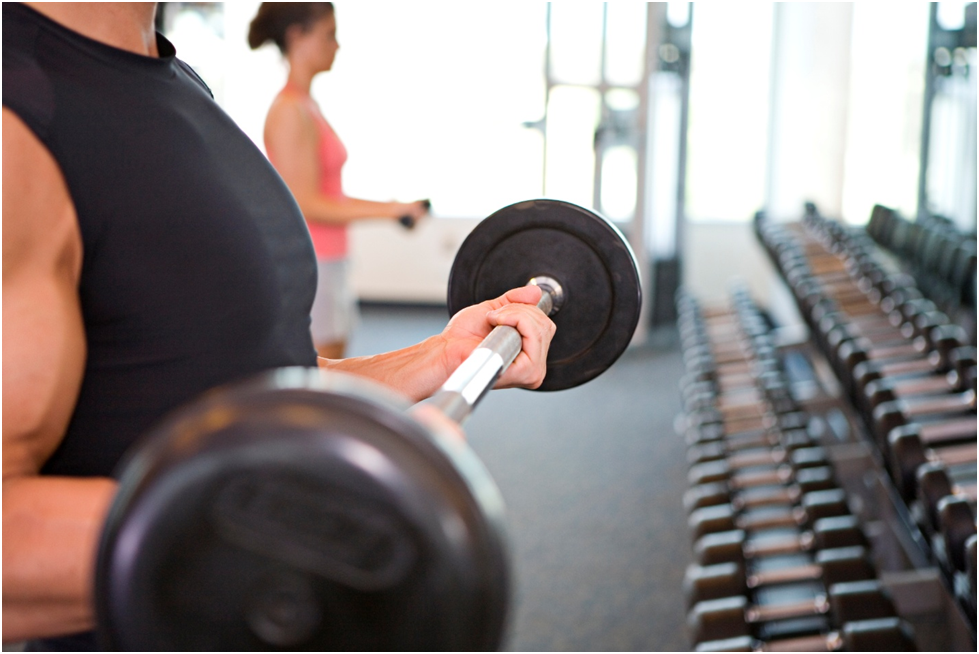
Aside from improving on the yoga mat, you can use the flexibility to improve your performance in the weight room. Most gym users find it difficult to complete a deep squat. Improved flexibility will allow you to deepen a squat because of the flexibility in your hips. Lunges are more effective too because of the flexibility of the hip flexors and ankles.

Before setting up a strength training session following your yoga class, consider poses you may not know about that require a great deal of strength. How long could you hold your body in a tricep pushup position, elbows touching your sides, arms creating a 90 degree angle? How long can you balance on one leg, no matter what your arms or other leg are doing? Then, do it again. Simple poses can be difficult, and it’s not unlikely to work up a bit of a sweat in a yoga class. Instead of stacking strength training and yoga back to back, both should be completed separately. Since current research shows too loose or warm muscles (like after yoga) would make your immediate lifting session less effective. Aside from being too relaxed to offer a full power push, some yoga poses are actually quite intense, and could hinder your strength training performance.

Don’t just take my word for it. Tracy and Hart (2013) found that, “Yoga subjects exhibited increased deadlift strength, substantially increased lower back/hamstring flexibility, increased shoulder flexibility, and modestly decreased body fat when compared with a control group.”

Sweat or no sweat, the self reflection period at the closing of a class leaves any yogi with a new awareness of themselves. An optimum collision of strength, flexibility, and soul saturating success.

References:IMG_0354 (1)

Tracy, B., & Hart, C. (2013). Bikram Yoga Training and Physical Fitness in Healthy Young Adults. Journal of Strength and Conditioning Research, 822-830.

More Reads:

http://life.gaiam.com/article/can-yoga-replace-strength-training

http://www.bodybuilding.com/fun/yoga_bodybuilding_benefits.htm

Successful Masters Athletes Following Smart Training Plans

By Alison Hall

In August, Mason Recreation provided smart training tips for masters athletes. We recently caught up with three successful masters athletes who continue to follow smart training plans and stay active throughout life. The common thread with all three athletes is “age is only a number.”

Mason alumna Toni Binning competes in Olympic-style weightTonilifting competitions. Toni trains 60-90 minutes a session, 4-5 times a week, with no more than three days in a row. She recently set records for the snatch, clean and jerk, and competition total for the 40-44 age group and 48k weight class. All of Toni’s training is specific to Olympic lifting, and she stays injury-free by foam rolling and stretching before and after every training session. She’s not afraid to take a rest day or decrease the training intensity if need be, always focusing on smart training practices. With smart training, her next goal is to snatch at least her body weight in a competition. Toni believes you should not let age stop you from trying anything. Her advice is to listen to your body. If something hurts, stop. If you are tired or not sleeping, take a day or two off. Be sure to allow your body to recover.  Seek out an expert to teach you correct mechanics and prevent injury. Toni shares more about her fitness activities in her blog at Fitnessfoodfamily.com.

Mason Recreation member and OsWynneher Lifelong Learning Institute student Wynne Tysdal recently traveled to Machu Picchu, Peru, for a hiking adventure. Wynne credits Mason Recreations’ Boot Camp and Yoga classes for her balance, strength, and endurance. All three were necessary on her Machu Picchu hikes. Her weekly plan consists of three Boot Camps, two Yoga classes, and Pilates. When Mason Recreations’ Boot Camp started last year, she had already decided that lunges, squats, and jumping jacks did not fit her “mature” fitness plan. Then she realized the benefits of strengthening glutes, hamstrings, and hip flexors by trying these exercises. She feels that even with squats, lunges, and some high-impact drills her arthritic knees are much happier, and she is stronger overall. It paid off on the hike—Wynne crawled right up the nearly vertical Monkey Steps at the end of the Inca Trail, passing by the other hikers. She says that the Boot Camp mountain climbers on Gliding Discs, although not her favorite, deserve all the credit. Wynne loves the energy that exercise gives her and loves feeling fit. Boot Camp is a great workout and it also has been a great way to meet people and build a support group. Boot Camp is offered at the Aquatic and Fitness Center Mondays, Wednesdays, and Fridays at 6:15 am.

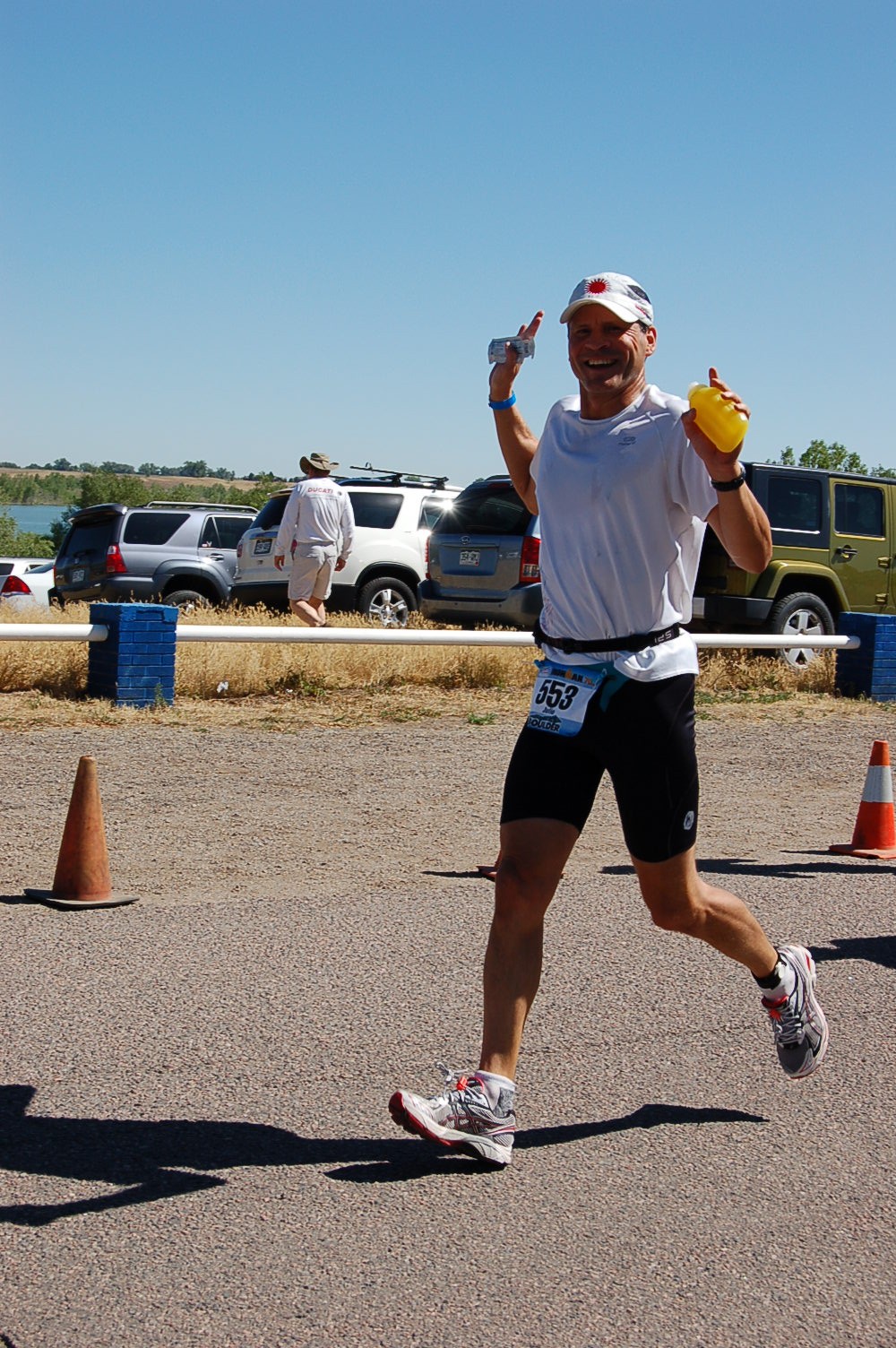
Masters athlete Julio Blanco started competing in triathlons in 1987 when he was an undergraduate student at George Mason. Since then, he has completed 43 triathlons, varying in distance from sprint to half Ironman. Julio stays active year-round, Julioincreasing his activity when training for a race.  During the off-season, he runs 2-3 times a week, spins 2-3 times a week, and strength trains 2-3 times a week. Many times, he takes time off from swimming during the winter and starts again a month or two before a race. Julio has realized that with age his body has tightened up, and recovery takes longer. His main approach to avoiding injury is to listen to his body. If he thinks he’s overly fatigued, he’ll shorten a workout or take an extra rest day. He now devotes more time to flexibility and core strength, mainly by practicing yoga. He also says that sleep is key—if he doesn’t sleep well, it impacts his capacity for exercise. Julio feels that he has nothing left to prove as a triathlete, but he continues to be involved mostly because he enjoys staying active and being fit. Plus, doing the races is fun, and he takes pride in the fact that at almost 50 years old he can still give guys one or two decades younger than him a run for their money on the bike!

Reference:

Mason Recreation. Smart Training For Masters Athletes, https://recreation.gmu.edu/2014/08/smart-training-for-masters-athletes/


The Diary of A Happy Yogi

By: Ashley Whimpey

Poised at the top of my mat, I rolled my shoulders back, and closed my eyes. Just as my instructor requested, I inhaled and I listened for the next cue. A strange sound began to fill the room and, since I was confused, I peeked just a bit to find the source. I noticed that my instructors mouth was moving, and the sounds were coming from him. My mind supplied an answer of, “He’s chanting something,” and then the class started to move into poses. Startled, I whipped my head side to side, trying to follow the smooth flow of my fellow yogis. I couldn’t understand why the teacher wasn’t speaking a language I understood He would mutter something, and the class would move, just like magic. I, however, was extremely unenchanted. After the class ended I was able to speak with the instructor.

He told me he was using Sanskrit. Sanskrit is the language of yoga. Most asanas (that’s Sanskrit for poses) have Sanskrit names. For instance crow pose is bakasana in Sanskrit, and corpse pose is savasana. He apologized for strictly speaking in the language, and told me he doesn’t usually adhere only to the Sanskrit terms. Had it been my first yoga experience, I may have never come back. It’s intimidating enough to not feel as if I’ll be able to complete a class physically, let alone when I’m worrying about deciphering the words I’m hearing.

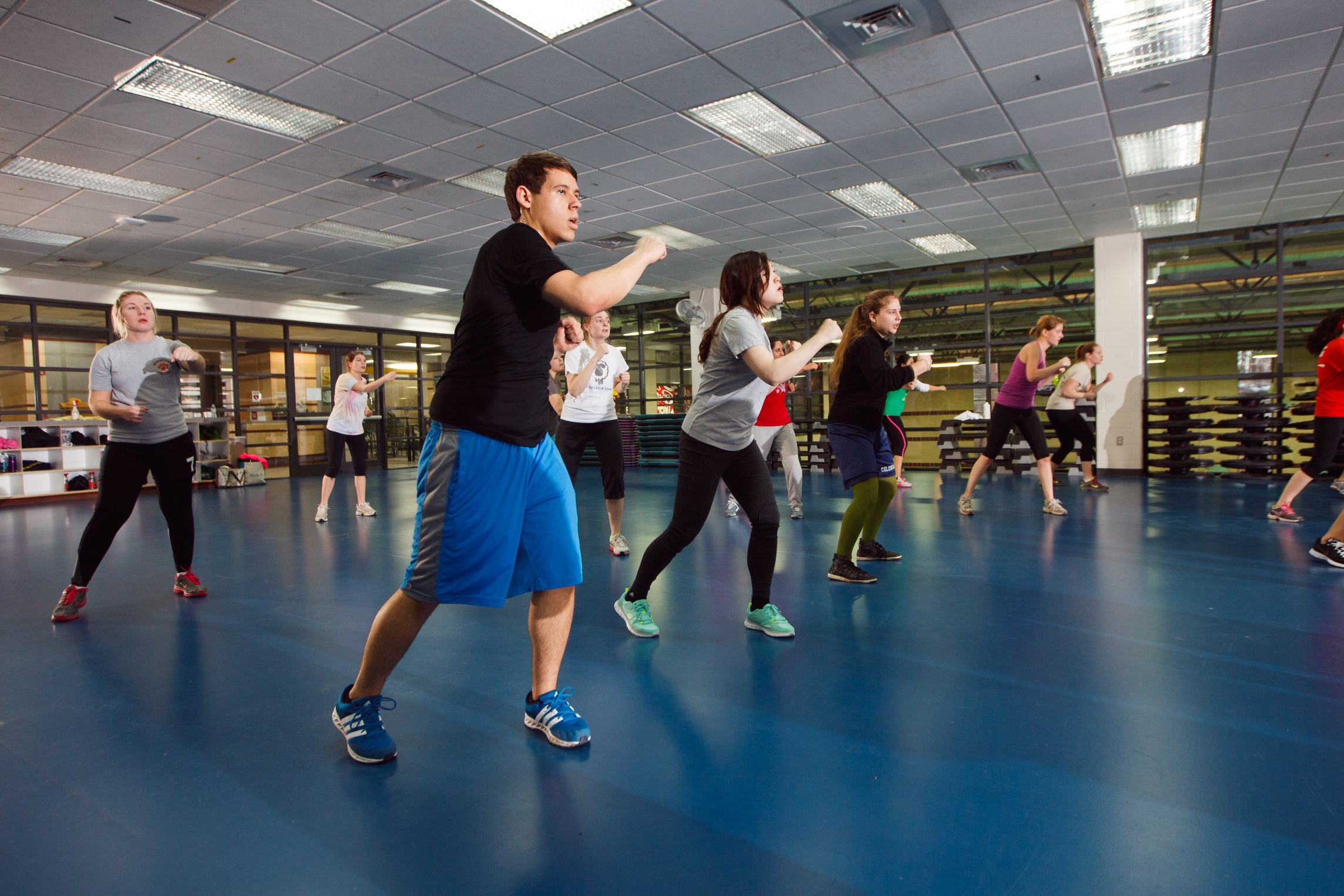
When you don’t understand the language being used in a class attendees have a tendency to depend on the instructor demonstration. Instructors at the front of a class in other exercise classes such as cardio kickboxing or dance formats serve as great models. The instructor shares the cues while demonstrating as participants watch, and then mirror the movement. When you are upside down and twisted under your arm in a yoga class it may be a little harder to see the instructor demonstration. A good way to overcome this is to practice yoga more often. Many simple (or seemingly simple!) poses are completed in most yoga classes. Over time you’ll become comfortable with the yoga atmosphere. You’ll also develop an understanding of how your instructor organizes a class, and be able to flow smoothly between the poses.

The experience that I have shared with you is pretty rare. Aspiring yogis should not be weary of all yoga classes being taught in languages you don’t understand. Barriers such as time or skill level shouldn’t stop you either.Yoga for twenty minutes or yoga for an hour and twenty minutes are equally beneficial. Even if all you can do is start the morning with  a five minute stretch to get the blood flowing, that is a great place to start.

Keep in mind that every yoga class can be taught to include beginners. Yoga is about “honoring your practice” which means to simply do your best and be proud of that alone. A yogi who can touch their toes is no better of a yogi than the one who tries. I hope that sharing my experience encourages you to honor your practice in the near future. There is no better day to start than today!zions

Exercise And Anxiety

By: Anya Sailey

Exercise is generally recognized as an alternative method of treatment for a broad range of anxiety disorders. Anxiety disorders are the most common mental illness in the U.S., affecting 40 million adults age 18 and older in the United States, comprising 18% of the population (ADAA 2014). These disorders are highly treatable, yet only about one-third of those suffering receive treatment (ADAA 2014). Anxiety disorders are characterized by excessive and unrealistic worry about everyday tasks events, or objects; simple phobias involve excessive anxiety evoked by specific objects, while social phobias are fears of interaction with others, particularly involving large groups (CDC 2014). Studies have shown that utilizing exercise as an intervention has repeatedly proven to be effective in the treatment of anxiety. The study titled “Reducing Anxiety Sensitivity with Exercise,” conducted by Smits et. al. in 2008, further serves to evidence this notion.

This study examined the role of prescribed exercise in reduction of anxiety-related sensations (anxiety sensitivity). Sixty participants with elevated levels of anxiety sensitivity were assigned at random to one of three categories: two-week exercise intervention, two-week exercise intervention coupled with cognitive restructuring, and a waitlist control condition. Assessments were taken at pre-treatment, mid-treatment, and post-treatment intervals. Both exercise conditions led to a significant reduction in anxiety sensitivity compared to that which was demonstrated by the waitlist condition. Interestingly enough, the cognitive restructuring component did not alter the effectiveness of exercise intervention. Changes in anxiety sensitivity aided with the participants’ moods in terms of reducing anxiety and depression.

This research study is one of many, which further supports the claim that exercise is an effective intervention in treating anxiety-related disorders. This type of study is helpful in terms of therapy program design, where exercise could potentially be included as an important component to accompany any combination of behavioral and pharmacological therapy. Additionally, the utilization of exercise as a component of therapy could aid in reducing conditions that co-exist with anxiety disorders, which include depression.

References:

Anxiety and Depression Association of America (ADAA). 2014. Facts and statistics. Retrieved from http://www.adaa.org/about-adaa/press-room/facts-statistics/

Center for Disease Control and Prevention (CDC). 2014. Mental health: Anxiety.

Retrieved from http://www.cdc.gov/mentalhealth/basics/mental-illness/anxiety.htm

Smits, J.A, Berry A.C., Rosenfield D., Powers M.B., Behar E., Otto, M.W. 2008. Reducing anxiety sensitivity with exercise. Depress. Anxiety 25(8), 689-699.New Picture

What Is Yoga?

By Ashley Whimpeyyogamat

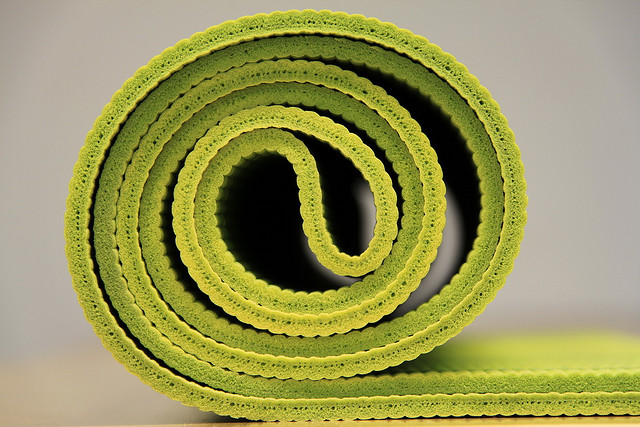
Meaning “to join together,” yoga is a combination of exercise, breathing, and meditation. Yoga joins the mind and body into one harmonious collaboration. The history of yoga can be traced back 5,000 years to ancient cave drawings and depictions found by archeologists. Sometimes confused as one of the versions of the Hindu faith, the ancient drawings provide evidence that yoga is not a religion and actually began nearly 1,000 years before the estimated start of Hinduism.

While yoga itself also has multiple branches, the most commonly practiced form began from a text named Yoga Sutras by Patanjali written in the 1st or 2nd century BC.The text explains 8-limbs of yoga.  The limbs focus on eight guidelines to life:

1) Yama (restraint), persons are to refrain from violence, lying, stealing, or hoarding.

2) Niyama (observance), persons are to have purity, contentment, tolerance, study, and remembrance.

3) Asana, the physical poses in yoga.

4) Pranayama, the breathing techniques.

5) Pratyahara, mental preparation for meditation.

6) Dharana (concentration), persons hold their mind on one object for a specified time.

7) Dhyana (meditation) persons focus on one thing (or nothing) with entirety of their mind.

8) Samadhi, the realization of the essential nature of the self.

Together the eight limbs are referred to as Ashtanga yoga, and today modern Western yoga typically only focuses on the third, fourth,and fifth limbs of the practice.

The physical asanas (poses) of yoga are also the main portion of several other popular types of yoga in the West: Bikram (hot yoga), Power, Prenatal, Restorative, Rocket Yoga, and Vinyasa. Typically, a traditional Bikram, Rocket, or Vinyasa yoga class will always follow the same sequence of moves and asanas, while other yoga classes may differ slightly each time.

Yoga is great for every living creature, but for the sake of this article we’ll say it’s best for humans. Those with limited flexibility come to yoga in order to gain a bit more flexibility and thus more mobility. The stressed come to relax. The thoughtful come to think. The tendons and joints and bones come to be smoothed, gently healed, and deeply strengthened. As you may have noticed, yoga can be used as a form of intense exercise or a calming and mentally restorative exercise.

Despite being for everyone, yoga can be intimidating. Do your best to find a good yoga instructor. A good yoga instructor will guide any level of class with variations of even the most advanced poses so that their class is open to everyone.

Even after deciding to try a yoga class, the actuality of getting there and being dressed can be overwhelming. Participants are not limited to the $80 yoga pants from LeeLimes or whatever the hottest supplier is these days. A simple pair of moveable shorts and a t-shirt are fine. It’s typically preferred for participants to wear slightly more fitted clothing in order for the instructor to observe form. The instructor can then guide you through adjustments if anything is out of line, and stop you from being forced to inhale through masses of fabric. For example, relaxing in down dog is much harder when the nostrils are full of loose t-shirt. This is not to say your clothes need to hug so closely to the legs, torso, or arms of every minute crevice, bend, or follicle is seen, but they should stay close enough to allow the instructor to identify where there is potential for injury due to improper placement.

The best place to start is wherever you are (recreational facilities, independent yoga studios,etc), with whatever you have (Bikram, Ashtanga, Power, etc.), and immediately, because it’s never too early (or too late!) to start doing something nice for yourself.

References

“Types of Yoga.” Womenshealthmag.com. Web. 20 Oct. 2014.

“General Yoga Information.” General Yoga Information. The American Yoga Association. Web. 20 Oct. 2014.

Working Out With A Partner

By Savannah Nortonworkoutbuddy

Some students have a hard time getting themselves to the gym. Not everyone associates the gym with a fun or relaxing experience. Certainly many of us find it hard to stay motivated to eat better and exercise. It can be hard to hold ourselves accountable. That is why going to the gym with a friend can enhance your workout experience. It gives you the chance to keep your body healthy and build relationships.

Workout buddies can keep you accountable. They help you determine if your workouts are moving you toward your goals. It is okay to be picky when choosing this specific partner. Workout buddies can be the key to helping you perform your best. A 2011 study published in Psychology of Sport and Exercise found that “the exercise habits of people you know have a positive influence on your exercise habits.” Thus, it is wise to pick a workout buddy who knows a bit about the gym facilities and how the machines work. This will give you the best potential to help you have a successful workout.

You know the saying, “a little competition never hurt anyone.” An addition to this idea would be, “especially healthy competition.” According to Fit Body HQ, one study found that participants perform better when they are paired up with a workout partner who is in better shape than they are. This study found that to maximize your workout, the buddy should be about 40% better than their partner. This is known as the Kohler Effect, also known as not wanting to be the weakest link.

Workout buddies can also keep an eye out for their partner’s form and any obvious mistakes when completing a workout. It is also nice to have a spotting partner ready when you do squats or bench press, making the workout much safer. Having a workout buddy will bring new skills, techniques, and knowledge to a workout. They can introduce new exercises, correct form, and a fresh perspective on ways of being active. Variety in a workout helps to avoid boredom. Having a workout partner will always keep things interesting and fun.

Although this discussion has focused on your workout buddy try not to forget your contribution. Workout buddies might need their partner for some of the same reasons that the partner needs them. Your commitment should be to keep each other on a workout schedule and thinking healthfully. So, having a workout buddy is a positive way to make sure a workout is safe, enjoyable and help you get the results you seek. Besides, why work out without a smile?


References:

10 Reasons to Get a Workout Buddy (and What to Look For) – FitBodyHQ. (2013, February 14). Retrieved November 1, 2014.

Romeo, M. (n.d.). 3 Reasons to Have a Workout Buddy. Retrieved November 1, 2014.

Wagner, G. (2012, July 1). Strength in Numbers: The Importance of Fitness Buddies. Retrieved November 1, 2014.


How You Can Build Exercise Self-Efficacy

Cardio-Kickboxing WorkoutBy: Alison Hall

Do you want to exercise, lose weight, regain health, but
don’t feel confident you can succeed? These feelings of low self-efficacy can influence a variety of behaviors, including a person’s goals, the amount of energy expended toward achieving those goals, and likelihood of attaining a certain level of behavioral performance (American Psychological Association, www.apa.org). What is self-efficacy? Relating to exercise, the American Council of Exercise (ACE) defines self-efficacy as “The beliefs in one’s own capabilities to successfully engage in a physical activity program” (Kovar, 2014).

The links between self-efficacy and health and fitness have been studied extensively with a variety of results. Some found exercise success leads to feelings of self-efficacy while others found that high levels of self-efficacy lead to exercise success. Yoon, Buckworth, Forcht, & Ko (2013) found the more physical energy a person had, the higher their levels of scheduling self-efficacy were, and thus were able to make the time to exercise. Wingo, et al. (2013) found that in their test group, weight loss over time increased more for those whose self-efficacy scores increased than for those whose self-efficacy decreased over time. Another study provided physical activity and then measured self-efficacy versus a control group. The test group reported positive changes in self-efficacy toward fitness after 24 weeks while the control group did not (Dallow & Anderson, 2003). Past experience can be a predictor of current self-efficacy state. Someone who has had exercise success in the past is likely to have more self-efficacy toward future exercise. Someone with multiple failed attempts at exercise is likely to have lower self-efficacy and negative self-esteem.

There are many ways to use this research to find a way for the obese person to achieve weight loss success. Kovar (2014) suggests that if multiple previous failures to exercise are causing low self-efficacy, start small with short-term attainable goals. It’s okay to set a long-term goal of losing 100 pounds in 18 months. It’s good to have something you want to lose 100 pounds for, such as travel, rock climbing, or to complete a race. These goals, however, require progressive steps. Determine goals for 1-4-week periods. These goals will eventually get you to your long-term goal, but they are achievable, and you can see the results, which builds self-efficacy. Such a goal would be to eat two additional servings of vegetables per day, drink 24 more ounces of water per day, make plans once a week to meet up with a friend while taking the dog for a long walk, or meet a personal trainer twice a week for 30 minutes. Seeing success from these goals builds self-efficacy. Then you have more confidence to set the next level of goals.

Another way to build self-efficacy levels is to have a cheerleader in your corner. This person can be a workout buddy, a personal trainer, or a friend who is expecting a text from you after each workout. If you choose a workout buddy, make an appointment to meet that person at the gym for each workout. You can make the workout a game either by partner exercises such as medicine ball passes or 2-person tubing strength training, or you can race on the treadmill to see who can cover the most miles in 30 minutes. Give and expect positive reinforcement for each workout. A personal trainer can give this reinforcement as well. Good trainers will help you reach those short-term goals and let you know that you are doing well along the way. They will encourage you along the journey and build your self-efficacy so you can meet that long term goal.

If you choose to text a friend after each workout, make sure it’s a friend who will respond and congratulate you every time. As you come to expect their praise, your self-efficacy will increase and you know you can do it. Make sure you tell this friend your short-term goals as well as your long-term goal. Then he or she can remind you that meeting the short-term goals is  one step closer to your long-term goal activity.


References

Dallow, C. B., Anderson, J. (2003). Using self-efficacy and a transtheoretical model to develop a physical activity intervention for obese women. American Journal of Health Promotion, 17(6), 373-381.

Kovar, E. R. (2014). Building exercise self-efficacy in overweight and obese clients. IDEA Fitness Journal, 11(1), 84-87.

Wingo, B. C., Desmond, R. A., Brantley, P., Appel, L., Svetkey, L., Stevens, V. J., & Ard, J. D. (2013). Self-efficacy as a predictor of weight change and behavior change in the PREMIER trial. Journal of Nutrition Education and Behavior, 45(4), 314-321.

Yoon, S., Buckworth, J., Focht, B., & Ko, B. (2013). Feelings of energy, exercise-related self-efficacy, and voluntary exercise participation. Journal of Sport & Exercise Psychology, 35, 612-624.