Mason Recreation

For the Love of the Game : Men’s Club Rugby

22006200610_e061901e73_kLooking back at 1965, Rick Stafford and George Wiltshire didn’t know that they would be starting the first intercollegiate sport at George Mason University – Men’s Rugby. When asked how it all began, Stafford took us on a trip down memory lane and explained that he was simply walking through the Ordinary (the student lounge in 1965) when he came across a sign that read: “Call this number if interested in playing rugby”. He and Wiltshire were curious and found themselves playing with the Washington Rugby Club. After the game, they both agreed that they were hooked. Stafford went far enough to say, “Rugby became an addiction”. Immediately, they began gathering players to create a team. Stafford and Wiltshire give credit to Neb Turner, the Dean of Students at the time, who helped recruit Mason students to play. “I have to give credit to Neb Turner” Wiltshire said; Turner played rugby at the University of Virginia and wanted a team at Mason. Stafford said that Turner would interview students and then “would pick the athletic guys and point them our way”. Turner was a big help to the two co-founders, adding to their success in recruiting students for the team. When they needed players, they went into the Ordinary, asked if anyone wanted to learn how to play and students would be willing to check it out. When asked about the recruiting process, Wiltshire replied with a chuckle. Despite being praised as the founders of the oldest intercollegiate sport in school history, Stafford and Wiltshire are humble men who give much credit to the people around them.
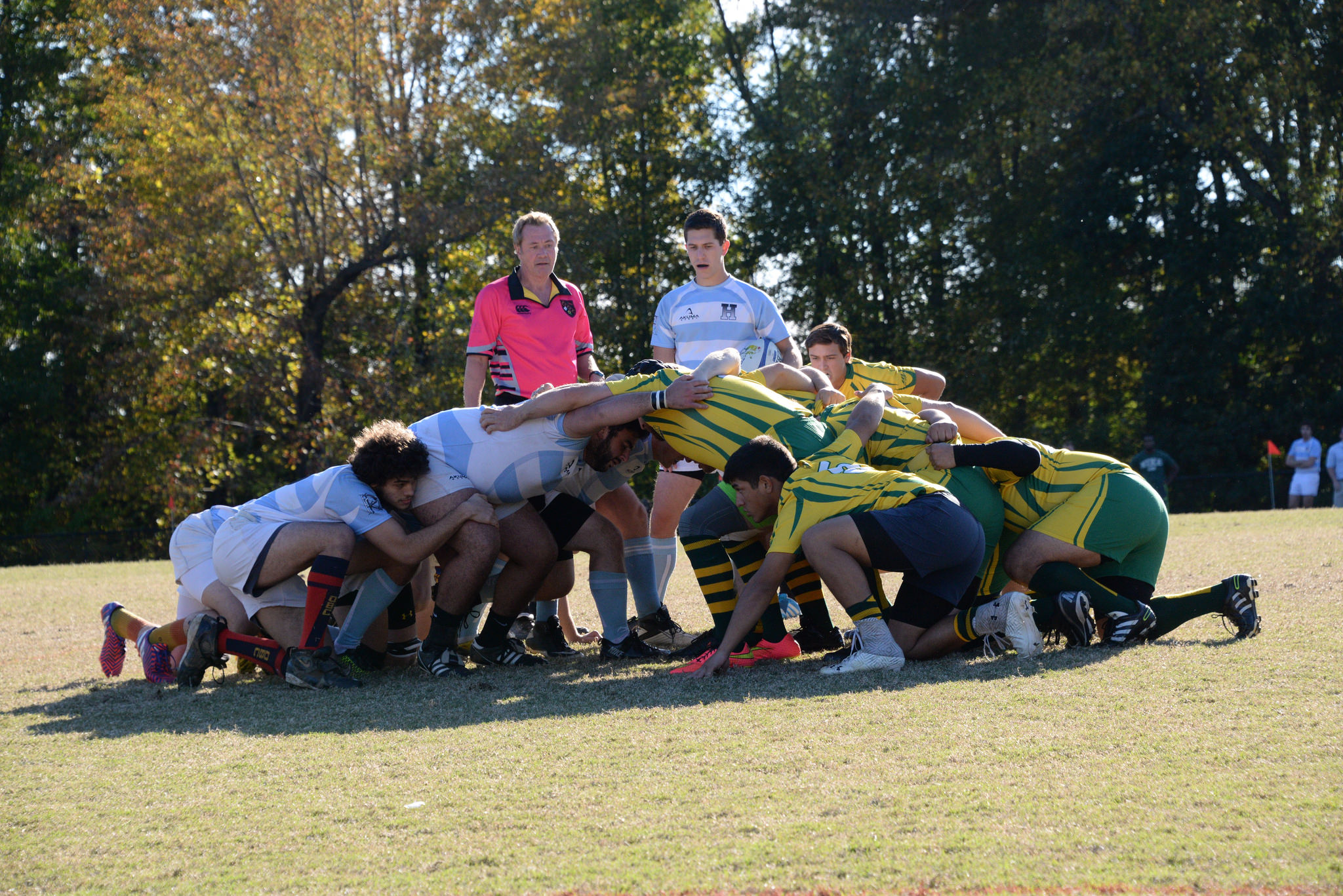
21573253153_0047832e6c_kIt has been 50 years since Rick Stafford and George Wiltshire started GMU’s Men’s Club Rugby team. This past weekend, all of the team’s alumni were invited to celebrate their 50th season as a club sport. Former players from every decade came out to the West Campus fields to watch the George Mason Patriots take on the John Hopkins Blue Jays. It was a celebration for both the alumni and current rugby team. The alumni celebrated their past work and the current players celebrated beating John Hopkins by a score of 36-24. Rick Stafford was asked about the team’s play and said, “ they have some good instincts and are clearly led by a quality coaching staff”; George Wiltshire added, “Mason was good at getting rid of the ball just like they were 50 years ago.” To end the day, Stafford and Wiltshire were asked if they ever play rugby nowadays. Both men chuckled at the thought with one of them saying, “Twenty-two years is enough.” At the end of the day, the alumni event was a great success – full of laughs, smiles, shared memories, and a winning team. Rick Stafford and George Wiltshire are a reminder to us all for why we play sports. It is not for the fame, it is not for the glory, and it is not to beat up your friends or opponents. We play, simply, for the love of the game.
Diary Of A Happy Yogi: Adjustments

By: Ashley Whimpey

A pretty respectable yoga magazine recently published an article that offended me as a yogi. The source of my offense was a “Just Say No!” article discouraging yoga teachers from physically adjusting students in class. Before I began ripping the page out of every copy in the store, I tried to see where the other side could be coming from. Obviously the author stood on enough ground that the article was published and aimed toward the new yogis gathering information.

The author was arguing that teacher adjustments were wrong and potentially—even likely—dangerous. The stock photo accompanying the article was of a teacher standing above a student in down dog and using both hands to push their hips up and back for them. The student did not look to be in what I call the danger zone—the place where something is so seriously wrong it’s not at all humorous.

The article’s arguments were that a teacher would push students too far, force them into a place they weren’t ready for, and injure them for life. As a teacher, it is difficult to see someone struggle with anything when you have the answer or the fix right in your reach. There is so much we can’t do as humans in the most general sense, so it’s nice to do something when we can. Sure, some adjustments by some teachers in some places could be detrimental. There are unqualified people in every profession; they aren’t necessarily the norm or standard.

Adjustments offDOAHY Adjer many more benefits than the risk of a misinterpreted instruction. It is often difficult to translate the knowledge you have as a teacher to the student. This is especially true because there are so many different learning styles. Some students are auditory learners and need only the sound of my voice. Yet others hear “drop the shoulder from the ear in a neck stretch” three or four times, can see the example right in front of them, even meet my gaze and look totally engaged, but won’t drop the shoulder. When I gently tap their shoulder with my fingers and zap all of their attention to the spot where my fingers are, then they get it. This is an adjustment, and it wasn’t dangerous at all.

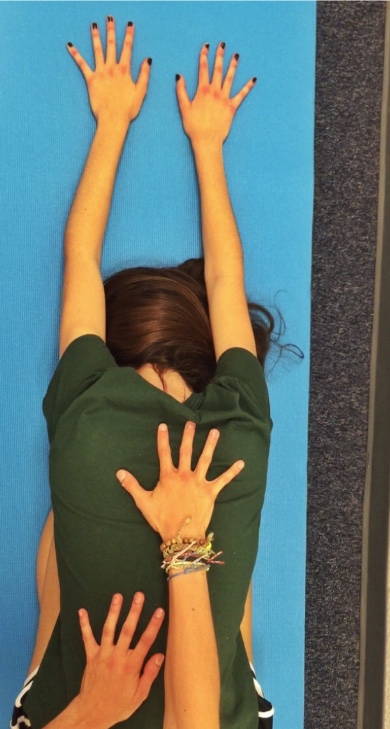
Adjustments aren’t always for students who are doing something wrong. They can also be for students who are doing something really right. Students lying pretty flat in a wide leg seated forward fold could benefit from a gentle press on their low back to help them go even deeper. Students in triangle reaching up may benefit from a slight tug on their wrist to pull their arm up higher than they can get it on their own.

I’m not saying it’s mandatory for students to accept adjustments all the time. There are days it’s nice to sit in the corner of the class, practice, and leave relatively unnoticed but still touched by the rhythm of the music and the soft energy of a good class. Still, it is not accurate to “just say no” all the time. It is not accurate to call out adjustments with a blanket statement of calling them horrible. Instead, seek out teachers and classes you trust. And then just say yes.

Mason Recreation Fitness Classes—Give Them A Try

By Alison M. Hall, MS, CPT

Have you ever walked past a Zumba class and thought, “that looks like fun, but can I do that?” Or have you ever heard the music pumping from the group cycle room and thought, “I’d love to ride to that music, but can I really go in that big, dark room?” Group fitness classes can be scary at first, especially if you don’t know anyone in the class or if you haven’t taken one before. However, Mason Recreation group fitness welcomes everyone. It doesn’t matter if you don’t know how to set up a bike, if you believe you have two left feet, or if you’ve never exercised in a group setting before. All of our instructors are certified fitness professionals, and they are trained in how to help a beginner. If you already love Zumba and rock every cycle class, you will get an amazing workout in our other group fitness classes too. Each class truly offers different experiences and levels.GEX Benefits

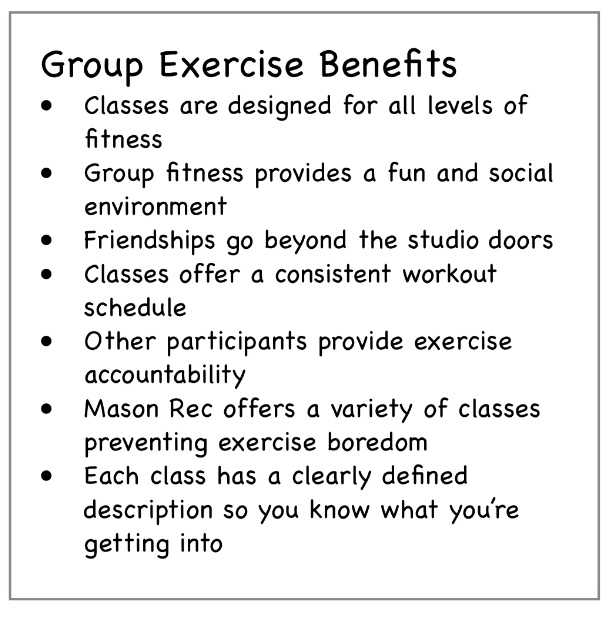
Group fitness classes offer many benefits beyond simply exercising on your own. The classes create a fun social environment, a consistent schedule, and a safe and well-designed workout with no prior knowledge or experience necessary. Additionally, there is an accountability factor. The instructor will welcome you back each time you come. Seasoned participants will congratulate you for joining in. New friends will text you to make sure you’re going to show up, whether it is 6:15 am boot camp, noon cycling, or 6:30 pm yoga. Group fitness creates a new camaraderie and accountability among participants and the instructor.

Another benefit of group fitness is variety. One common reason for quitting an exercise program is boredom. Our instructors offer a variety of formats and styles to challenge you all semester long. Each cycle instructor has his or her own style of music. Each Zumba class has a different flavor. Each yoga instructor offers his/her own personal touch. Every martial arts and self-defense format has its own focus.

To some, the variety of exercise options can be overwhelming. Our group fitness schedule does offer a lot of options, but another benefit of group fitness is that each class has a description. Read the description and start with one or two classes that interest you. Get comfortable with those classes, then try something new, or if you like a particular format, try a new instructor. Keep up that pattern, and you will take control of your own fitness destiny.

Finally, the most common reason given for quitting an exercise program is lack of time. All of our classes are an hour or less, including 30-minute classes offered Monday–Thursday at 5:00 pm. Our full schedule is available at recreation.gmu.edu. Green Access classes (Group Exercise and Cycle) are always free for full-time Mason students and for a minimal facility membership fee for part-time students. Unlimited Gold Access classes (Yoga, Pilates, Martial Arts and Self-Defense) are $50 for students and $70 for other Mason Recreation members for the entire semester. If you have questions you can contact us at [email protected]. We can’t wait to see you in class!

Off Campus Student Survey

surveyAre you a current Mason student and live off campus? If so, we want to hear from you. Please complete the short survey to help us better serve you and enter for a chance to win an iPad mini.

Off-campus Student Survey

AFC Re-Opening & Update

AFC Re-Opens After Annual Maintenance Down Week

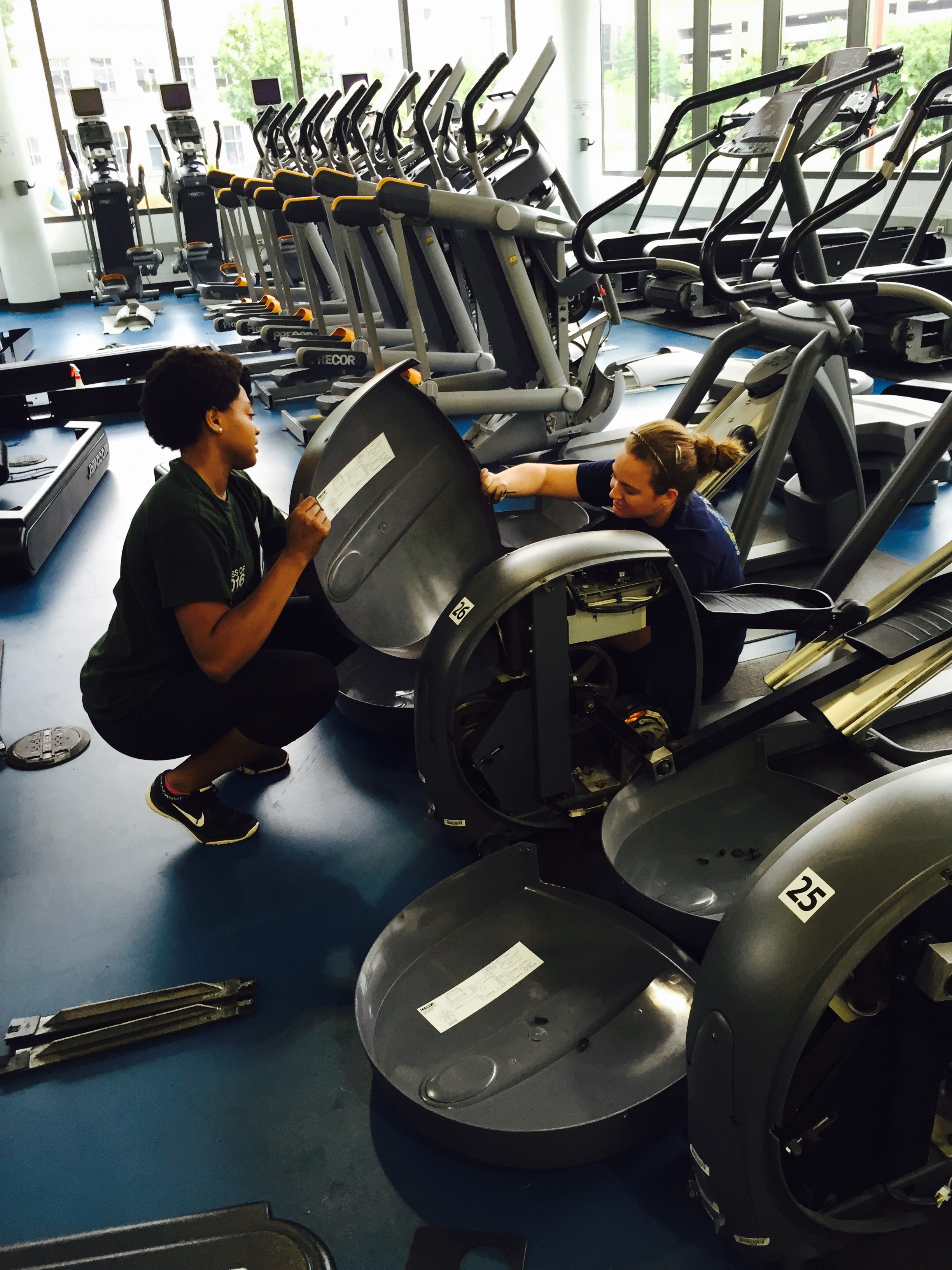
We are often asked, “What happens during Down Week?”  Each year we close the AFC to address maintenance, cleaning and other major projects that cannot be done during the year without disruptions to our operations.  Some of the items that we addressed this year include:

  • Deep cleaning of facility air ducts and vents
  • Deep cleaning of pool decks, bulkheads and drains
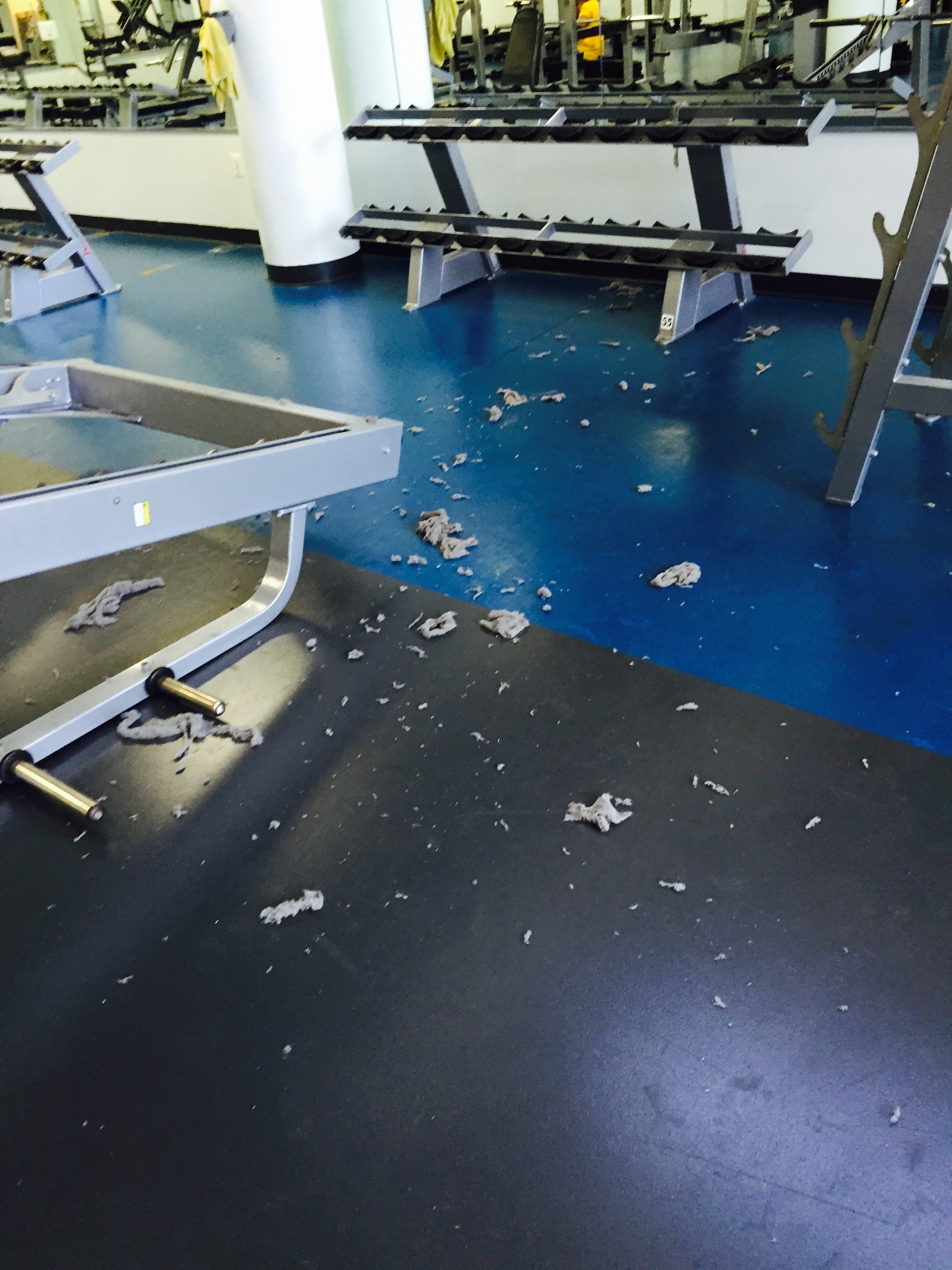
  • Deep cleaning of fitness area and equipment
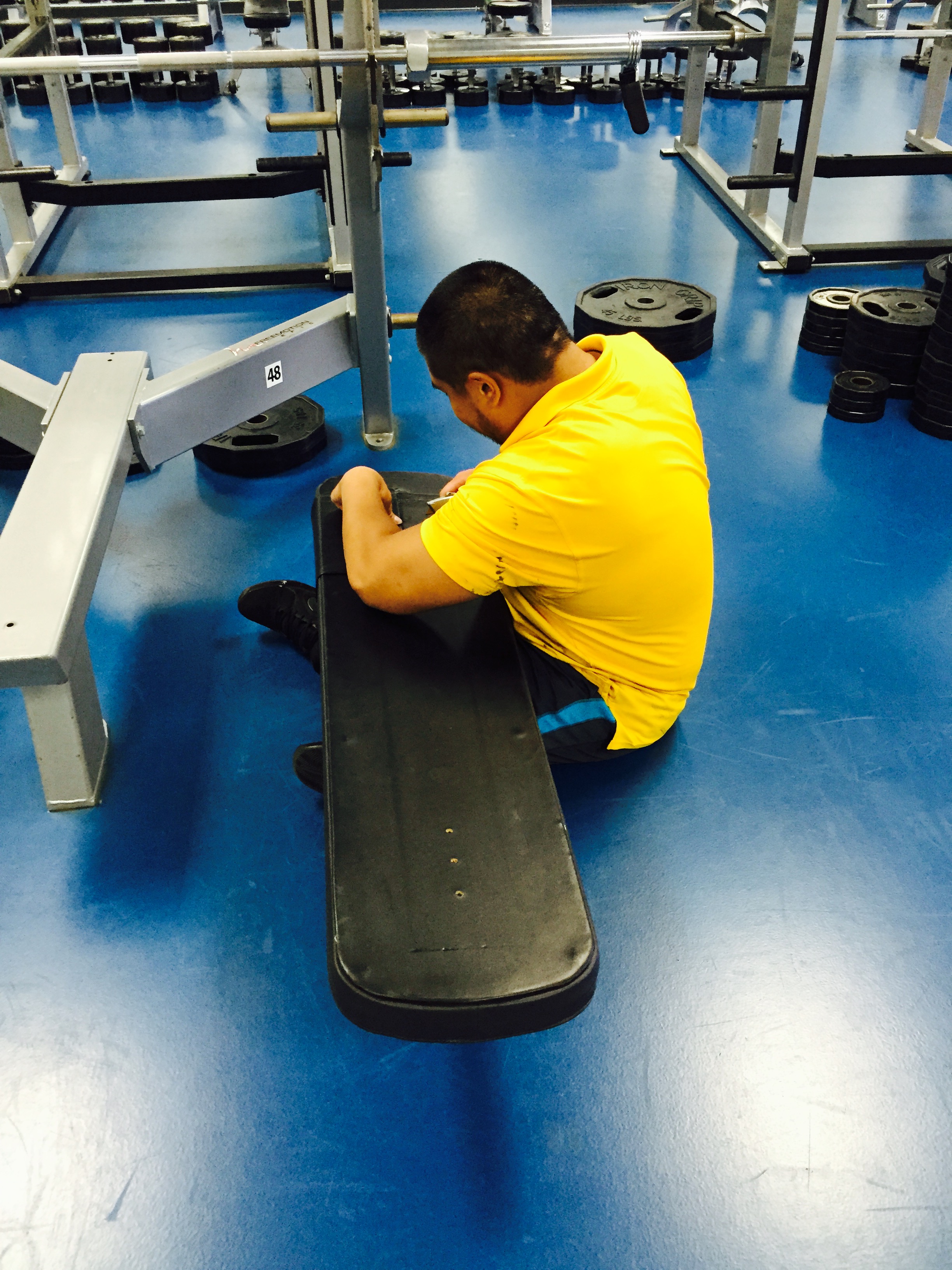
  • Painting and re-finishing of fitness areas and facility benches
  • Preventative maintenance on mechanical equipment
  • Repairs and preventative maintenance to fitness equipment
  • Installation of new floors in the men’s and women’s locker rooms and well as our lifeguard area
  • Replacement of shower heads in men’s and women’s locker rooms
  • Replacement of soap dispensers and shower curtains in the men’s locker room
  • New fitness equipment such as a heavy bag and ropes

Our student and professional staff have worked hard over the past two weeks, and we hope that you, our patrons, enjoy our improvements and find the facility to be welcoming and enjoyable.

                                                              BEFORE                       AFTER

Locker floor before-after Pool Tile before-after Shower before-after

equiment repair fitness repairs.1 pool drains clean - action


lower level dust Wmn Locker Room - lockers Wmn Rental Locker Room completed


Diary of a Happy Yogi: Honor Your Practice

By: Ashley Whimpey

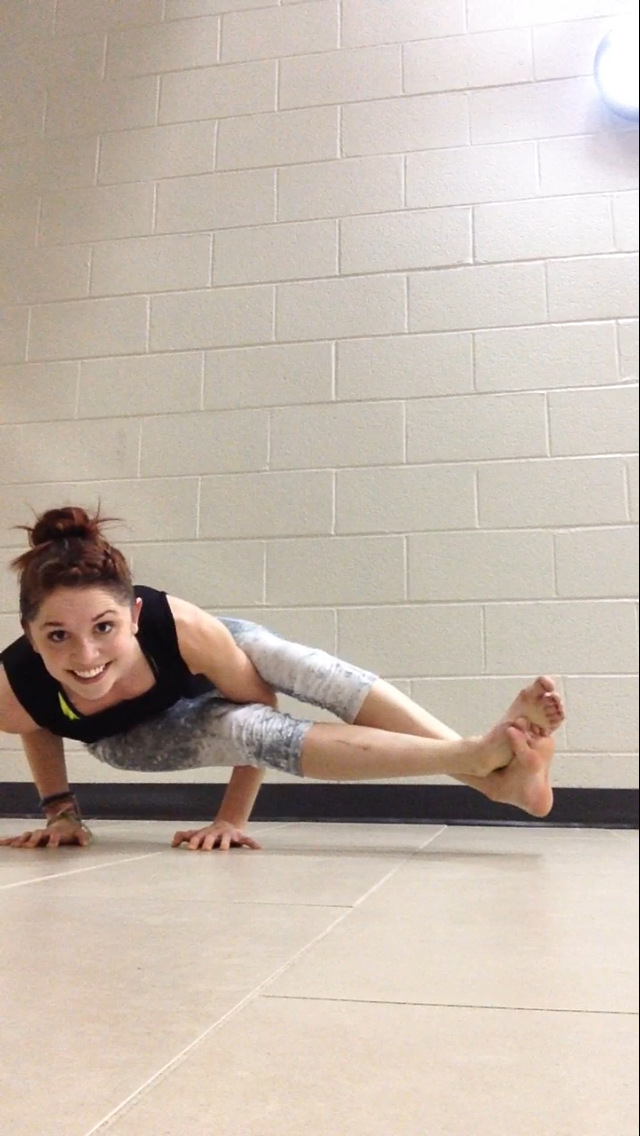
Yoga could be seen by some as art due to its endless number of shapes created during practice. While beautiful, the best shapes are the ones that honor your practice.

Today, meet Carson and Lily. Carson has been practicing yoga regularly (about three times a week) for the last year or so, and has begun to complete full expressions of many of the poses. Lily is here for her second yoga class ever. She used to be a dancer and feels confident can twist her body into anything to match the instructor.

About half way through the class, Carson feels fatigued, especially in his legs since he ran this morning. Carson breaks himself from the flow to pause in a child’s pose for a minute and then resumes his practice. Lily is also feeling very unstable. Her years of flexibility are allowing her to extend extremely well, but now that the balance portion is coming up, she’s starting to get wobbly and almost takes out a fellow yogini.

Closing the class with the final series, the instructor offers progressions and lower variations of a shoulder stand. Carson feels confident about tucking his chin into a familiar place, pressing his heels into the ceiling, and even advancing to lower his hands from his low back as he removes the bend in his hips. Lily does her very best and is able to manage the same shape, but does not feel able to breath freely and experiences a lot of pain on her upper vertebra.

The class concludes.

Carson and Lily are probably at a similar fitness level, and because Lily is female, she probably has more inherent flexibility than Carson. So why did Lily wake up the next morning unable to move freely and Carson felt rejuvenated? The answer is simple: Carson was honoring his practice.

Honoring your practice is tuning in to the soft hum of life inside that dictates how and when you will do something. It’s what causes the difference between Monday morning’s class being incredible—leaving you feeling like you could run a marathon, lift a car over your head, and take on Michael Jordan on the court—and Friday morning’s class leaving you feeling like you’re made of stone. Both classes could be exactly the same, but it’s not always the class or the lineup of workouts that changes, but rather the hum inside you.

Honor is very similar to honesty. You might start off saying, “I’m compromising my triangle so I can reach for the floor because Susie is. I feel like I’m better than she is, so if she can, I can.” Then you realize it doesn’t matter what Susie is doing. Susie is not you. Susie does not have the same practice, thoughts, or internal hum. Honoring your practice also lets you go the other direction by realizing “My instructor said we could take it down, but I’m actually feeling pretty great, and I want to expand on that feeling.”

To honor your practice is to allow your focus to be so sharp and tuned in that the other yogis fall away from your vision. With practice you’ll begin to move only on their energy, feeling it and adding to it with your own, instead of whipping your head around trying to match them or surpass them.

Three things are crucial to honoring your practice:

  1. Ask when you don’t know. If you’ve never done a shoulder stand before or if your triangle isn’t matching up with the instructor’s but you can’t tell why, ask. The reason to practice with an instructor is to be able to have someone to ask, otherwise you might as well stick to hurting yourself in your living room and feelinging lost.
  2. Realize not all days are created equal. Maybe last week you had your elbows wrapped all the way under your toes in that forward fold, but this week you feel more like it’s a better idea to keep your hands on your shins, or vice versa.
  3. It’s a yoga practice. At practice we learn, we learn, and we learn.

Graduating Master’s Student Molly Owens

mollyMolly started working for Mason Recreation December, 2010 and has worked as CSA, MOD, Club Sports Program Assistant, as well as being a member of the Development and Leadership Team.  She says she’s been in sports her whole life, so working for Mason Rec made sense.

Molly played soccer from an early age through high school where she was captain of her Woodbridge High School team her senior year.  She wanted to continue to play in college, so she joined Intramural and Club Soccer as a freshman and is currently the Women’s Club coach.

Recently she’s been able to further her experience in the sports world and move toward her goal of working in sports and international relations.  Her time spent interning with the United States Olympic Committee (USOC) Coaching Education Department and SportsUnited within the State Department, has reinforced that goal.

While working with the USOC Coaching Education Department, Molly assisted visiting coaches and athletes as they attended their cutting-edge training and educational sessions.  She exclaims, “It was amazing and I’d like to go back there to work!”

Within the past week Molly completed her internship with the State Department working with SportsUnited.  Their goal is to strengthen relations between the United States and other nations by using sports as a way to break through socio-economic and language barriers.  During her time with the SportsUnited, Molly worked as liaison for coaches and athletes from all over the world while they attended clinics and educational sessions.  As liaison, she assisted the visitors when needed.  Her most recent group, young runners from Australia, attended the Sports Visitors Program for two weeks.  While here, they worked out and participated in fun runs.  The grand finale of their visit was attending the Penn Relays.

She says that interning for both groups was great and she is excited about working in the field of sports and international relations.

Molly is graduating in May with a Master’s degree in Educational Psychology.

By Jennifer Lehman, MS RYT